An account of two Family Doctors from Boulder Colorado working 6 months Locum Tenens in Westport New Zealand
Thursday, March 7, 2013
Keas
Wednesday, March 6, 2013
Bird-watching and Glacier-hiking
After our night in Hokitika, we continued our drive south along the west coast. Next stop was Okarito Lagoon, locally famous as the only New Zealand nesting grounds for great white herons. We rented kayaks and paddled up the lagoon and into side streams as the tide came in, and then turned back as the tide rolled out (good planning by Eric!). It's late in the season, but we saw several beautiful herons plus lots of other seabirds.
That evening, we arrived in the village of Fox Glacier, and I was thrilled to add another bird to my New Zealand list: the wood pigeon, or kereru. It's somewhat rare, but a tree at our motel had 7 kereru in it at one time!
The next day was brilliantly sunny and warm, perfect for our day on the ice. We signed up for a guided all-day tour, were outfitted with sturdy boots and crampons and set off. After a short bus ride to a car park, we hiked about an hour through rainforest to the terminal end of Fox Glacier. Going from lush green ferns, waterfalls and moss to solid ice is striking. The front of the glacier is 100 meters high and it measures 12 km in length, but the valley it has carved is so deep that perspective is tough. Once on the ice, wearing crampons and using poles, we hiked up to some ice falls and saw amazing glacier features: crevasses, seracs, moulins. The weather did turn cooler as we were surrounded more and more by ice, but our guide (Dave from England) knew the way out.
New ice is formed as up to 50 meters of snow falls at the top of the glacier annually. Fox Glacier is a relatively fast moving glacier, and the ice moves downhill a few meters everyday. Unfortunately, ice at the bottom is melting faster than it is being made at the top, and Fox Glacier, like most glaciers worldwide, is receding overall.
Tuesday, March 5, 2013
Hokitika
Saturday, March 2, 2013
Kristen and Angie Visit!
Kristen and
How would you like to fly for what seems like an entire day across the Pacific Ocean and end up on a fabulous deserted beach. Well Kristen and Angie were able to do that! Our daughters had planned to visit us early on in our stay in New Zealand as they wanted to do one of the Great Walks of New Zealand before the summer season was over. Our friends Mark and Linda Baxter had the great idea that they should fly into Nelson and we should all have a couple days on Awaroa Bay on the Tazman Bay in a beach house. So we picked the girls up in Nelson from the airport and the caught a water taxi, as the house is only accessible by water, to Awaroa. A great way to overcome Jet lag!
The house, called a Batch in New Zealand, was great but though we were there only for a couple days, it seemed like a lot longer. We kayaked in the estuary, watched birds, went swimming, waded across the river to the next beach where Mark knew we could swim out and harvest some fresh green lipped mussels. 
Angie now knows Marks Secrets to the Perfect Mussel preparation, though it might help that we collected the Mussels about two hours before dining.
On the boat trip back to our car for the drive to Westport, we were lucky to see a little Blue Penguin swimming around as well as a Gannet, a great large sea bird.
Unfortunately our stay at Awaroa was all too short , though we were anxious to get back to Westport and show the girls where we having been living and working. We are getting pretty good at driving the twisting hilly roads through the Rain forest to the west coast.
Most of the time , of course, we stood on one leg.
How would you like to fly for what seems like an entire day across the Pacific Ocean and end up on a fabulous deserted beach. Well Kristen and Angie were able to do that! Our daughters had planned to visit us early on in our stay in New Zealand as they wanted to do one of the Great Walks of New Zealand before the summer season was over. Our friends Mark and Linda Baxter had the great idea that they should fly into Nelson and we should all have a couple days on Awaroa Bay on the Tazman Bay in a beach house. So we picked the girls up in Nelson from the airport and the caught a water taxi, as the house is only accessible by water, to Awaroa. A great way to overcome Jet lag!
Tuesday, February 19, 2013
Cape Foulwind
In a country famous for its walking tracks, we have several good hikes nearby. The walk at Cape Foulwind is the nearest and is quite well-known; it's a favorite of visitors and tour buses. The cape was first mapped by Abel Tasman, but named by Captain Cook in 1770 (evidently during some bad weather). Fair or not, the name has stuck.
The walk is 3.4 km long one way, and you can start at either end. We have visited 4-5 times since moving here, to walk at least part of it. This past weekend, I started at the light house, still operational.
After climbing a short hill, the walkway meanders along the top of the seaside cliffs, offering spectacular ocean views to the west, and pastures to the east. At one point, I walked through a sheep pasture, and they did not seem especially pleased to see me.
After 50 minutes or so (depending how many photo stops one takes), you reach the fur seal colony on the south end. At this time of year, the baby fur seals are getting bigger and have all been tagged. They still are quite playful, and some are still nursing, and it is very fun to watch.
The very end of the track descends back down to the beach through the lush foliage of New Zealand flax. This 6-8 foot plant seems to grow everywhere and is amazing to me. Overall, Cape Foulwind is a wonderful place to spend an hour or two; where else can you see seals, sheep, and horses all on the same hike? Not to mention the western weka, begging for food in the parking lot.
Friday, February 15, 2013
Minor observations on the New Zealand Medical System
Direct to consumer advertizing for prescription medications now approaches 5 billion dollars per year. A blockbuster drug makes 10 billion or so dollars, think lipitor or crestor or ability or prevacid.
The New Zealand health care system was aware in the early 1990s that they could not keep up with the obscene cost of these medications an founded a pharmaceutical board to address the issue. Know as Pharmac, the committee reviews medications and creates a formulary for prescribing including which drugs will be subsidized by the government. They are able to negotiate contracts with generic drug makes and then supply what I feel to be a very comprehensive list of medication to treat most conditions. If you are a health care policy geek, check out more information at ________________ http://www.pharmac.health.nz/about _____
Of course the US pharmaceutical giants hate this arrangement and are always trying to undermine it with trade agreements, perhaps why we never get New Zealand lamb at Costco, just a conjecture.Tuesday, February 12, 2013
Karamea
With another weekend without call, We took advantage of yet more beautiful weather and traveled north to Karamea, a tiny little secluded town that is at the end of the road of the Coastal Highway on the west coast. Karamea is a little haven for outdoor enthusiasts including hikers , backpackers, fishermen, birdwatchers and bikers. Most famously, it is one end of the Heaphy track, one of the great walks of New Zealand.
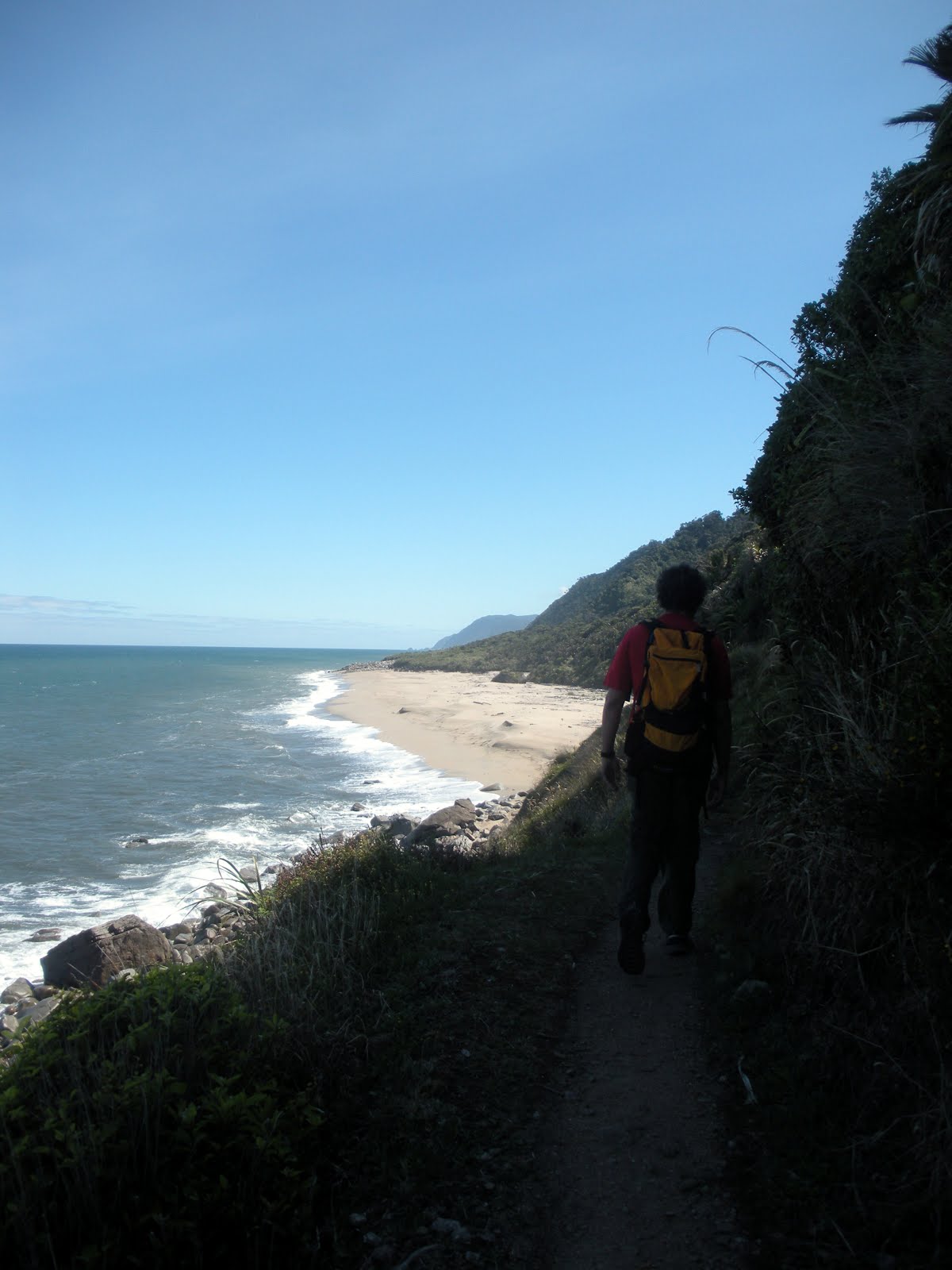
Carolyn and I hiked the last 8 kilometers of the walk to one of the little shelters along the way and then returned, we walked through beautiful Nikau Palm forests and stunning beaches, all completely deserted. The weather was perfect and the views outstanding. The true trampers will continue the walk for three or four days, climbing away from the coast, over the southern Alps and down into the Tasman area. Someday we hope to do that as well but for now we are content with our day hikes.
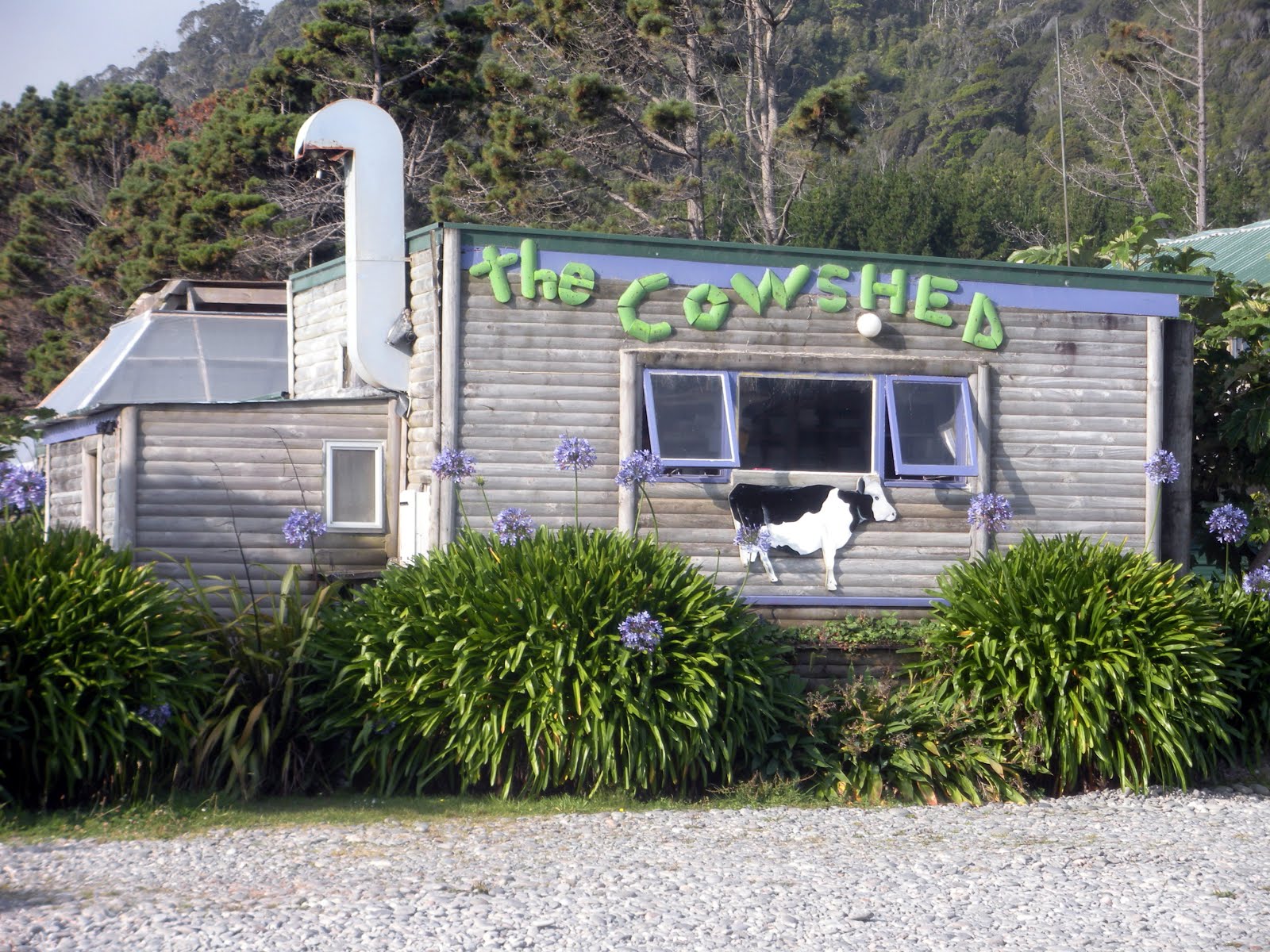
Sunday we drove the slightly nerve wracking road up to the Oparara Basin, famous for the beautiful rainforest and the large limestone arches. There we were fortunate to add the endangered Blue Duck to our list of sightings, at some point we will do a blog about the Birds as, living on the estuary, we have become quite the amateur birders. We did not quite get a good picture of it so this will have to do for now. The photos always fail to live up to the actual beauty of the landscape, unless of course you are photographing road signs, then it is actually quite representative. Coming home Sunday evening we had made reservations to perhaps on of the world's most remote gourmet restaurants. The Cowshed cafe is situated halfway between Karamea and Westport, 45 KM from a town of 900 people and 45 km from a town of 8000 people, yet it was run by two young women with experience as private chefs in the Mediteranean.
As it was the Sunday before Valentine's Day, they had a special menu, check out the appetizer tray:
It is astonishing to find places like this and try to figure out how they stay in business and such. Apparently 100 or so women are gathering there this Sunday for a formal tea with fancy dresses and hats. You never know.
A great weekend.
Boring alert: look for the next blog to cover a little more medical stuff that I find interesting.
Here's us on the Heaphy:
Subscribe to:
Posts (Atom)